NextgenHeating

Thursday, March 8, 2012

Hobs and Choice, something to get steamed up about?

We have been researching new kitchen appliances in preparation for replacing our kitchen.  Technology has really moved on since last time we designed a kitchen 20-ish years ago.   We did not really know the extent of this until we started looking.

The first innovation we had heard about is induction hobs.  The technology is actually quite straight forward and quite old being based on a medium frequency transformer where the base of the pan acts as a shorted turn.  The thermal inertia is very low which means it heats up quickly but the best part is that when the pan is removed, so is the load so the hob only draws power when actively in use which means its also very safe.  It does require special thick bottomed cast iron pans but our cookware is ready to be replaced in any case.

Our current hob is gas fired so I was interested in the relative carbon footprint compared with Induction cooking? From an efficiency point of view Induction hobs are claimed to be 84% efficient compared with around 40% for gas (Source Wikipedia).   The salesman also quoted the benefit of not requiring ventilation for induction hobs though I would think the excess heat from the gas would more than compensate for this.  Natural gas produces 0.29Kg of CO2 per kWh versus grid based electricity of 0.52Kg per kWh (UK average).  The maths points to induction hobs being the winner at 85% of the CO2 of the gas hob.  Cost wise its slightly behind as electricity is over twice the price of gas but overall its a thumbs up for induction hobs.

Last weekend we went to Batibouw 2012; the annual “ideal home” show of Belgium where everyone seemed to be showing off steam ovens.  Again steam cooking is not new;  I remember my mother using a pressure cooker when I was young.   It was a bit of a faff  though.  It seems steam is now back in vogue and we saw built in combi-steam ovens from Neff, AEG, Bosch and Siemens and others.  Again, interested in the potential carbon savings, once home I searched for information comparing steam oven efficiency versus conventional cooking.  After an hour all I could find was a mention of “around 50%” energy savings.  This seems reasonable as it’s a closed system not dissimilar to a kettle.   Indeed I’ve always been humbled by the simple lossless efficiency of an element directly heating water :o).   Steam ovens seem to require about 1.5Kw which supports the assertion of a 50% saving.

Both induction hobs and steam ovens seem to have excellent eco-credentials but you certainly pay for the privilege.  Typical prices were over €1000 for the hobs and up to €3000 for a combi-steam oven which is nearly 20x the price of the cheapest conventional oven. Hmm. … food for thought!

Wednesday, March 7, 2012

Smart Phones, Stupid Cars?

I recently found myself coveting a new Smartphone. Unfortunately manufacturers seem to be locked in an endless battle for MHz and the appearance of an after dinner mint. While I know I’ll be disappointed but my inner techno-junkie just keeps driving me to search for a replacement.

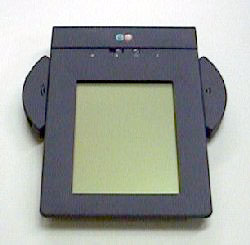
The EO440 - I did that
Don’t get me wrong, I get the smart-phone concept. I even helped to design one, the EO440 in 1991!  In 1992 I presented a concept to EO’s board for what I called "the Multimedia EO”, which had an ARM CPU, stereo audio, a [2D] graphics processor driving a [colour] VGA LCD and a Sony minidisk for storage but it was rejected as too radical ;o). EO closed their doors a year later because the market simply wasn’t ready.

My first personally owned mobile phone was a Nokia Communicator, followed by a Sony Ericsson P800 and a couple of Windows mobiles. While they weren’t particularly smart they did have one thing that my current "smartphone"; the Omnia HD doesn’t have – the ability to make calls. Its my fault really; I’m just not good at remembering to charge it and it’s battery life is hopeless. So whenever I actually NEED to make a call (like when I was hit by a truck on the Brussels Ring and needed to call the emergency services) the Samsung simply stares back at me with its one black eye!

I bought the Omnia three years ago after what I thought was considerable research. It had everything – 3g, WiFi, Bluetooth, FM radio, full web browser, 8 Mpixel camera, full HD video playback yada, yada. Two hours in I realised that the WiFi was out to kill my battery and had to go; that pretty much also put paid to web surfing.  About 3 months ago I also turned off Bluetooth as my now aging battery could no longer take the strain. It’s still a fair MP3 player if I’m honest and I take the odd photo. Otherwise its just a paperweight that I try to keep on charge in case anyone wants to call me, which takes me back to where I started this blog.

So I scour all the reviews for the figures on battery life.  Apparently 5 hours of use is now considered pretty good; In what universe did that happen? The Samsung Galaxy Note was my great white hope – surely in a brick that big they could fit a proper battery, but no, its only 2.5aH. So its 9.65 mm thick and 178 g – big deal, its still a £500 paperweight as far as I'm concerned.  I put a 3.9aH battery in my last Windows Phone, a Mio A701 and did not run a 5.3 inch display or a 1.4GHz dual core processor from it.  To be fair a double size battery is available for the Note but then it wont fit in its cradle :o(.


Rant over you might think? Well no, this is an ecoblog after all and I’m also in the market for an electric car :o)

Most people [perhaps those same people who think a 5 hours battery on a smartphone is ok and have them tethered to a wall socket most of the time] say that electric cars aren’t ready for primetime because their battery life is not good enough. However, like Smartphones I think I get the concept. I’m not one of your Top Gear troglodytes that won’t buy one because they have limited range. I know that 90% of my journeys are round trips of less than 50 miles and we have a second car for those longer journeys. Indeed if I did the fuel maths I could probably get rid of that too and just hire a normal car when I really needed to go a long way.

If only it looked as good as this!
So what’s the problem I hear you say? Well most electric cars are just stupidly expensive and I just don’t need one that badly. Then Renault came up with a Clio sized car that seemed to be perfect on paper and not badly priced. The catch? They rent you the battery. Ok, so people are concerned about battery longevity and this is one way of taking away the worry, but the rental cost is simply unreal. Its £60 per month, which is way more than the fuel cost of our current second car. We simply cannot do enough mileage to make it financially worthwhile.

So that’s two bits of tech-kit that my engineering brain is dying to have but my wallet is screaming no to. Is it me or are the business models of both Smartphones and Electric cars just out of touch with reality?

Tuesday, January 31, 2012

Game On!

I'm sorry to say that my blog has been somewhat neglected of late. You see, since April last year I have been embroiled in buying and moving into our first house in Belgium

Home Sweet Tervuren Home
The good news is that we are now installed in what started out as a 1960s 2 bedroomed bungalow with garage underneath but which was extended in the mid 1980s to almost double its floor area.  The house is a real mash up  from the 1963 open cavity wall and uninsulated floors of the original bungalow to the cavity wall and insulated block work of the extension and the circa 1985 gas fired heating system which replaced the original oil fired central heating boiler.  The house was double glazed about 7 years ago and so is reasonably thermally efficient. The loft was also converted into living space and seems to have been well insulated in the process. I estimate that the current heatloss is around 10kW @ 0oC.  The current oversized boiler is probably around 75% efficient.  This makes it an ideal candidate to be a test bed for the first Nextgen low carbon heating system installation.

When we moved in I immediately noticed that the the hot water system almost completely innefectual.  The 220 litre storage tank was heated to around 70oC twice a day by the adjacent gas boiler but lost almost all of its heat in two or three hours due to convection currents around a 20 metre long loop of unlagged pipe. A quick calculation shows the daily heat loss to be of the order 20kWh or ~ €2 per day - ouch!  Ironically the loop was designed to save water water by using a circulation pump to circulate hot water around the loop allowing hot water to be instantly available at a sink at the opposite end of the house.   This and the mass of unlagged pipes around the boiler led to the bizarre situation where the otherwise unheated garage was the warmest room in the house! 

Some loss from a hot water system based on a hot water tank is inevitable.  As a comparison Steven Harris of the Energy Savings Trust recently reported in his blog loosing around 7kWh per day from his solar powered hot water system.  In my case three hours of my time with adhesive tape, scissors, a knife and €25 of pipe insulation reduced the hot water heat loss by at least a factor of two with the happy side effect that we now normally have enough hot water for a shower at almost any time of the day!

Boiler post Insulation
Notwithstanding the “emergency” pipe insulation above my intention is to run the system "as is" for the first year to get a benchmark energy consumption for the dwelling.  This will then serve as a cross check against the Nextgen  energy usage simulation computer model which will be used to predict the payback period of the system.  It will also serve as a reference from which future energy reduction steps are measured.  My ambition is to reduce the carbon footprint of our house by at least 50% and perhaps as much as 70% compared to when we moved in.  This radical reduction cannot be achieved without a plan. Now that we are settled in I will have to get busy with simulations and costings.

Let the game begin! 

Saturday, January 7, 2012

Stuff and Nonsense?

Looks nice in the brochure :o)

[Written in April 2011 - more on that later] We recently took delivery of a beautiful new solid oak bedroom suite.  It filled us both with joy and a little guilt.  Joy because we have been looking for new bedroom furniture for over five years and this is the first complete set that we have both liked;  Guilt because it was made in Vietnam and bought and shipped via the UK.

Let me say I’m not against Vietnam.  I’m very pleased to be able to put money into this relatively poor country and given the obvious quality of the workmanship they deserve every penny.  No, it’s the carbon cost of sourcing from the other side of the world that worries me.  Oak is a very heavy wood so surely the carbon cost of its transportation is very high?  Of course it was not shipped to us by air; it came by container by sea. The carbon cost of shipping a container is actually relatively low and our furniture no doubt shared a container with several other commisions by the same company.
 
Unfortunately that container ship went to Liverpool and our furniture went into temporary storage before being shipped to us by road on a regular removals van.  This removals van had a stop in Boulogne before coming to us but was going on to Italy before returning back to the UK.  The last part of the journey had, no doubt, a much higher carbon footprint than the journey from Vietnam to the UK.

This may be a good point to bring in two other [not so] topical news items, namely the earthquake in Japan and the trade deficit in the UK.  There are warnings that there may be goods shortages due the Japan earthquake and resulting lack of Japanese widgets being produced for all kinds of goods and equipment.  Japan is a very strong exporter and has cornered the market for several commodities, clearly to such an extent that they dominate in those markets.  Taking these suppliers out of the supply chain is obviously having a detrimental effect on the manufacture of many types of goods.  Is this good for the world economy? No.  At the same time the UK, which seems to be struggling to be effective in producing goods for export is instead importing (like me) goods from around the globe. Our appetite for Sony PlayStations and TVs, Samsung mobile phones etc, etc is never ending and we have very few competitive products that the Japanese and Koreans want in return.

I’m not calling for protectionism, that is a bad thing, or blind patriotism – I never bought a British Leyland car because I never considered them to be competitive in quality versus the Japanese or even the French offerings.  What we need to do is find our competitive spirit and (re)start to produce goods that people both locally and globally will want to buy.

Talking of “stuff”, I’m writing this blog on the train to Frankfurt.  Sitting opposite me is a mother and daughter with three huge cases of luggage.  I have to wonder why they need to travel with over 60kg of stuff in tow.  In my lifetime there has been an explosion of “stuff”.  At the same time we are all (current recession included) much better off than we were a generation ago and our appetite for stuff just keeps growing.

My wife, Kate, and I are starting to wonder just how much stuff we really need.  Perhaps it is time that we simplify our lives and live more sustainably, going back to sourcing things locally where possible. That means taking a long look at what it is that people actually need and making it here in Europe.  Buying fewer, more expensive but higher quality, longer lasting items might actually be good for us and also good for the planet

Sunday, February 20, 2011

10:10 and Microsoft

My 10:10 article earlier today got me thinking about another topic.  Last year I noticed that Microsoft had signed up for 10:10.  I admit to having had a little intellectual snigger at this as Microsoft must preside over one of the biggest carbon footprints on the planet in the form of its Windows operating system.
  
It's easy to knock Windows and I am certainly not the first person to do it.  I also understand that Windows is one of the biggest, if not the biggest software project ever undertaken.  As such that it works at all is a minor miracle . After all many such projects have simply collapsed under their own weight.  Neither am I a Linux bigot; I still use Windows for the simple reason that it is the closest thing there is to a standard in the PC space.   No, the problem with Windows is not that Microsoft is incompetent, far from it. The problem is that it's simply too old.


Windows was written when computer hardware was much less capable than it is today.  For example, It had to make use of virtual memory to support all of its features.  Now the [SDRAM] memory on my PC, at 8Gbyte is 20x as big as the hard disk of the first computer I ran windows on but I still cannot turn off the virtual memory feature.  As a result it sits there "strumming" the hard disk even when I do nothing.  Worse by far is the automatic update system.  Think of all the servers, the network infrastructure and the sheer number of PCs involved to keep the OS alive today.  And all, it seems, for nought.  My Windows 7 installation, though less than 6 months old, is fatally flawed and requires (according to my web research) a rebuild but I don't have the time or indeed the heart to do it. This is all a waste of energy, both figuratively and literally.


The Intel turn-around over the NetBurst (Pentium 4) architecture is now very well documented.  Pentium 4 CPUs, in their push for more and more MHz were not just wasteful of power, but were to such an extent that they were starting to push the thermal dissipation problem to its limits. At the time I would only consider AMD CPUs as I valued MIPs/watt over raw MIPs.  I applaud Intel's courage in making the turn around to achieve a 4 fold reduction in power consumption while achieving a similar increase in CPU power.   Indeed their 2011 "Sandy Bridge" architecture with its dedicated hardware acceleration is yet another step in the right direction.


So could Intel's success be replicated by Microsoft?  Could they make a Windows compatible operating system from the ground up?  In theory, Yes, though many of us still remember Longhorn!  However all incumbents have a disadvantage and Microsoft shows no signs of having the will to fix Windows.  Only now, for instance, are they talking of porting Windows to run on the ARM.  I suspect this is merely a reaction to the disruptive force of the I-pad and its derivatives.All this reminds me of a recent PC-Pro article in which Hermann Hauser "Believes that Intel's days are numbered" and that ARM will inevitably kill Intel.  I have a huge respect for Dr Hauser.  I have had the privilege to work with him three times, the first of which, coincidently, was at Acorn at the time the ARM CPU was designed.    One of Hermann's favourite stories was of a visit from Bill Gates, who was then trying to peddle MSDOS.  Hermann sent him away saying he had superior technology which, of course, he did.  However you have to ask yourself why is Bill Gates now a billionaire when Hermann is only a millionaire?  Indeed Acorn had local area networking in 1984, long before Ethernet was brought to market yet it failed to capitalise on its technical superiority. Hermann, then, is a clever man but is not a perfect Industry barometer.  As per my previous article today,  I do agree with Dr Hauser that we are entering a new wave of devices with "good enough" technology.  That these devices are battery powered is great news for our global carbon footprints as any OS that runs on them must have power consumption high on its priority list.  As a new medium there is no need to be compatible with legacy programs so there is no need for Microsoft's OS.  To my mind that makes porting Windows to tablets both futile and irrelevant.  I think the jury is out as to whether ARM will beat Intel.  It is, however, becoming increasingly clear that one way or another Microsoft's carbon footprint is about to get a lot smaller.

The 10:10 challenge?

10:10 is a movement started, it appears, by the team that made "The Age of Stupid".  It seemed like a great way of getting like minded people together to create momentum for change.  I joined immediately.  One year on I admit to being a little disillusioned by their lack-lustre success driven mostly it seems by their inability to make concrete recommendations as to how their members might lower their carbon footprint.  10% would seem to be a relatively easy goal but it does require more than just changing perfectly good light bulbs for low energy ones.

I was recently accused by one of the VCs I'm talking to of proposing what might be a "boil the ocean story" in respect of NextGen heating.  He clarified this by saying "it needs widespread shifts in people's behaviour and major capital outlays to see real adoption".  I hope I've shown through this blog that by simple changes - moving closer to where you work and cycling to work, sensible use of traffic control, insulation etc I have saved much more than 10% of my carbon footprint and, apart from being a little fitter and a more comfortable, did not make any particular sacrifices.  It did however take conscious effort and conscious action (and some failures) to achieve it.

One strong hint at a solution was neatly eluded to by Peter Hinssen,  one of the Vlerick Management School professors and an IT futurist, in a Keynote called "digital, the new normal".   There is a slide about 25% of the way through showing a survey into "The necessities of life" where 49% of respondents mentioned  cell phones and electronic gadgets, most of which did not exist 15 years ago, populated 50% of the top 10.  Surely if electronic "toys" can achieve this penetration in half a generation then there is hope for green-tech too?  His  ideas  on "Good enough Technology" really resonated with me. e.g. why people use Skype over land lines, MP3 over DVD audio and why Blue-Ray has not achieved mass market penetration.   

I don't believe we should be content with scratching the surface of green-tech. I don't believe we need boil ocean's to get where we need to be either. We just need to find good enough technologies that we can deploy and enjoy.

Monday, February 14, 2011

Latency Versus Bandwidth – what Jeremy Clarkson and David Mackay need to understand

I was given a Jeremy Clarkson book, “Driven to Distraction” for Christmas.  In the opening article he casts doubt over the wisdom of the variable speed limits around the M25,  calling it “a new state control system to quash individualism on the motorway”.  Much as I hate to criticize a fellow Doncasterian I can only conclude that he doesn’t understand the maths.

Back in 1987 I worked for a consultancy.  One of my co-workers was a software engineer engaged in writing fluid modelling programs.  He told me that up to a certain point  the flow in a water pipe is linear and it travels with very little resistance.   Above a critical velocity the flow becomes turbulent and the water molecules bump into each other such that the flow is no longer a linear function of the pressure exerted.  My co-worker also told me that the flow of traffic on a motorway could be modelled in a very similar way to water in a pipe.  So much for individualism!

Let us apply the latency versus bandwidth analysis I used in the last blog to this new mathematical problem; how to get around the M25 as quickly as possible. The latency is what Mr Clarkson perceives, it’s the journey time.  To measure the bandwidth of a motorway you need to draw a virtual line across the road and count how many cars per second, per minute or per hour that cross that line.  For instance if we all obeyed the 2 second rule there would be 3/2 cars per second (3 lanes * 2 seconds), which is 90 cars per minute, 5400 cars per hour, or 130,000 cars a day.  Actually that’s not a lot considering how many cars use the M25 every day but then they don’t all use the same bit of motorway.  Of course many of us don’t obey the 2 second rule so the bandwidth is actually higher than that.  The point is that the bandwidth is most definitely finite. Whats more, in a traffic jam the bandwidth of the motorway decreases dramatically!

So how do variable speed limits help? Well, it appears that the M25 traffic planners understand the difference between latency and bandwidth and a bit about fluid dynamics.  From my analysis above the peak bandwidth of the motorway is largely independent of traffic speed and by reducing the speed of the traffic they are more likely to achieve a non-turbulant flow which keeps the traffic moving.  In other words the traffic planners are optimising bandwidth, not latency.   However the more vehicles they can get past a given point, the more they reduce the average latency too.  Left to their own devices individual motorists might indeed achieve a lower latency, but because they reduce the bandwidth of the motorway the average latency actually increases.

From a fuel consumption point of view traffic jams are a worst case scenario.  Its simple mathematics that for a journey of X miles and consuming Y gallons the average MPG is X/Y.  Of course the fashion is to talk about litres per 100km which is just the other way around.  However standing still with the engine running is time at 0MPG or infinite l/100km.  In order words, time spent stationary or even in a gear below the top is fuel wasted.  Coming back to the linear versus turbulent flow analogy, if every vehicle travels 56mph a linear flow would be achieved and the overall fuel consumption would be minimised.  

However, I for one would not like to drive everywhere at 56mph.  There is also a carbon cost to me being on the planet so time wasted is also carbon spent.   The good news is that providing that a linear flow can be maintained the actual carbon cost of the higher speed is secondary.  That is, if everyone went exactly 70mph then that would still be lower entropy than some people doing 85mph and others doing 50mph.

This brings me neatly on to the second part of my article – road trains.  One way to increase the bandwidth of a motorway is to simply make more lanes.  This is both very expensive and very environmentally unfriendly.  The second and probably more fruitful way is to reduce the time distance between cars.  Imagine if there was a way to make a road train such that each car travels safely just 30cm behind each other, or, say, 5m apart.  For the simplicity of the mathematics lets say they are travelling at 120km/h (75mph) or 2km/minute, 33.3m/second.  The bandwidth of this motorway would be 20 cars/second or 13x the current safe bandwidth. Actually you don’t have to imagine road trains as they are a practical reality right now:

In David Mackay’s otherwise excellent book “Sustainability without the hot Air” he makes mention of several promising low carbon technologies but road trains are not mentioned.  That Dr Mackay is anti-car is quite evident.  However public transport, as alluded to in my earlier blogs is not a panacea and I doubt if people will be willing to give up on personal transport anytime soon.  Road trains represent a pragmatic solution that can reduce car journey times and keep traffic flowing, thus reducing the carbon footprint.   

Further, by getting the cars so close together one of the major contributions to fuel consumption, wind resistance, is dramatically reduced.  Anyone who watches motor racing understands slipstreaming.  Dr Mackay uses this precise argument to postulate why trains are more efficient than cars.

There will always be some people who want to go faster than others.  So let me put out a straw man for people – keep the motorways 3 lanes, make the inside line 60mph, the middle lane 70mph and the outside lane 80mph, and make road trains of 10-20 cars followed by a gap.   To change lane the driver indicates his or her intention and the on-board computers negotiate to find a gap and fit in the car.  As the relative speeds between lanes are slow this can be done quite easily.  Indeed with all that bandwidth there will be gaps in the trains. After all each lane has more bandwidth than the current motorway has.  Now Mr Clarkson and Dr Mackay, at opposite ends of the carbon-political spectrum are both happy :o). 

Wednesday, February 2, 2011

Bandwidth versus Latency, a common misconception

As an electronics engineer I came to understand the difference between bandwidth and latency.  Bandwidth is the amount of objects that can travel across a medium per unit time e.g. Megabytes per second from a hard disk (HDD).  Latency is the amount of time each object takes to get to its destination.  Taking again the example of a HDD this is usually governed by the seek time.  For those that don't know, the seek time is the time the hard disk takes to physically move the head across the platter of the magnetic disk to find the right track and then the time for the right part of the disk to spin under the head.  For a 7200RPM hard disk the data comes around every 60/7200 seconds or 8.3ms.

Consider a computer program trying to access a single byte of data from a disk.  Imagine we have a modern computer with a processor running at 3GHz.  This means (as an order of magnitude) it can process 3,000,000,000 instructions per second.  It issues a command to request the byte from the hard disk.  The processor in the hard disk electronics calculates where to move the disk head to, moves it and waits for the data to come under the head.  12 ms later the byte is handed over to the processor.  In this time the processor could have executed 3.6 million instructions but instead did nothing because it was waiting for the hard disk.  If programmers were foolish enough to write programs that randomly accessed many small pieces of data, you can imagine that this program would run extremely slowly no matter how fast the processor was.
 
Once the data is under the disk read head, it streams off the disk extremely quickly; at circa 100 Mbytes per second.  Imagine the computer program wanted to read 1 Mbyte instead of 1 Byte. Now we still wait 12ms for the first bit of data but then we get 1Mbyte of data in only 10ms.  The throughput of the program is increased hugely to 45Mbytes per second.  We see that the thing that we care about i.e. the work done, the throughput, is a function of both bandwidth and latency.

All very interesting I hear you say, but why publish all this on an eco-musing blog?  Well, there is another parameter that comes into play, and that is the effort expended per amount of work done.  The CPU in the above example did not do nothing for 12ms, it sat there "spinning its wheels", generating heat.  The rest of the computer is also alive; The hard disk itself spins its platters and moves its heads, the display lights its backlight etc.  Even in the second example the computer spends half of its time doing nothing but warm the planet.  This is why over the last year I have been steadily replacing the main hard disks of my computers with solid state HDDs (SSDs) aka flash disks.
 
SSDs have no moving parts which makes their seek times around 0.1ms; 2 orders of magnitudes quicker than traditional HDDs.  As they have no motors or moving parts they also use less power.  The only drawback is that they are expensive, or are they?  The machine I am typing on has 120Mbyte SSD and a 1Tbyte HDD.  The OS, Windows 7 and programs are on the SSD and all my data is on the HDD.  It turns out that Windows, being nearly 20 years old, was designed when computer memories were small and so is made up of lots of small files, 69,534 small files in my case, which is why it takes forever to boot. The boot time of this machine before I installed the SSD used to be about 2.5 minutes; now it is about 35 seconds. Given I use it daily that soon adds up to a lot of time; 700 minutes per year.  As a consultant I charge of the order of €1 per minute for my time, so that's a €2000 saving over the SSD's three year lifespan versus an initial outlay of €200.

It is not only my time during the latency of boot-up that is saved.  Toms Hardware found that computers with SSDs were on average 15% faster than their HDD counterparts.  As I work with computers about 9 hours a day, that's a potential saving of 1.35 hours daily.  Of course the bottleneck is not always the computer - after all, I can only type at a certain speed, but let's say it saves 2% of my time and 5% of the electricity used by the computer overall.  Over 3 years that equates to ~150kWh of electricity or €22 worth plus another €1200 in terms of my time. Another way to look at it is that the SSD pays for itself in about 3 months and saves carbon too!
 
Of course to do a full analysis of the carbon footprint I would have to calculate the embodied carbon in the manufacture of the SSD + HDD versus the just the HDD.  That might not look so good. But then what is the carbon cost of my time - heating, lighting, food, clothing etc?  That is, perhaps, going a little too far for this humble little blog.

Bandwidth and latency are interesting parameters to analyse.  They can also be applied to roads that allow objects i.e. you and me to travel from A to B. But that is for another blog  ... 

Friday, January 21, 2011

Paris, A broken city?

I’m sitting in Gare Du Nord, Paris on the Thalys train soon to set off for the return trip to Brussels. I took the train as it appeared to be quicker and cheaper than taking the car. I was wrong on both counts!


The train from Brussels to Paris is indeed very quick, whisking one from capital to capital in 1 hour 20 minutes. The problem starts once deposited on the platform at Gare Du Nord. I thought I had worked out some ongoing trains to get me close to my destination. I was first looking for “the blue line” (well it was blue on my copy of the plan). It also seemed to be called the RATP but I could see signs for neither. After 20 minutes and three cryptic clues from station staff later I found the RER (as I now know it) two floors down from the main station. I boarded the train but it continued to sit at the station for another 5 minutes. No problem I thought, only 2 stops on this train. It then ground into the next station and waited a further 10 minutes before moving on. I eventually arrived in "Notre Dame" about an hour after disembarking from the Thalys and now too late catch the last regional train to where I wanted to go.

I emerged from the underground station to find I really was outside Notre Dame cathedral and reluctantly hailed a cab to take me to my hotel at an additional cost of €30 and another 30 minutes. Total journey time from home to hotel was four and a half hours, about an hour more than I could have comfortably done it in the car.

The journey back was worse. The customer’s office, in the south west of Paris was at an intersection of the Peripherique and traffic starts to build at 4pm and doesn’t stop until 10pm. This was my original motivation for taking the train. I tried to call a taxi (actually several taxi firms) to take me to the local railway station but none of them wanted to come as the traffic was too busy. Eventually I had to jump on a bus heading in the general direction of central Paris.

At the bus terminus was an underground station but I'd been advised by the customer to take a taxi as it would be quicker and easier. My colleague had an earlier train than I so we took his advice – big mistake! I am sure the taxi driver took us for a ride, if you know what I mean; We took 45 minutes and €43 to get to the Gare Du Nord.

I am sure millions of people like to live in Paris, after all, why else would they do it? For me there is nothing so appealing about the place that I would be willing to spend my life crawling around in my car, or on dysfunctional train systems or buses. Every Parisian road is full to overflowing with cars travelling at little more than walking pace and belching out carbon dioxide. The general population seems to be resigned to the fact that their commute consumes over 10% of their waking hours. My colleague and I boggled at the waste of life and resources.

Brussels has problems but its transport system is streets ahead (pun intended) of Paris and its appeal just as great. Perhaps another case where small is beautiful?

Saturday, January 15, 2011

Heat 2010 – A lot of hot air?

At the end of last year I attended the HEAT2010 conference in Cambridge. This small, one day event organized by CIR is one of many they organize yearly on different Carbon technology topics. As I walked in from the snow outside, several exhibitors were showing off their technologies.
 
What looked like a gas boiler took my eye.  Indeed it was a gas boiler but with a difference.  Built by Genlec of Chester, it included a organic Rankin cycle electricity generator using a scroll compressor in reverse.  Thye claimed that in addition to the 10kW of heat, generated by the condensing gas boiler at 93% efficiency, the unit also generates 1kW of electricity.  The business model is interesting as, unlike the sterling engine based Whispergen, it is a standard form factor wall mounted boiler which would be easy to retrofit.  The price was said to be “about £800 more than a normal gas boiler installation”.  The prices they were using for gas and electricity respectively were 3p and 13p and I presume therefore that there is a saving of around 10p per kW.  The unit needs to run for 8000 hours to generate a payback. They claim that this translated to a payback period of ~4 years, which does seem reasonable.  Assuming a 4 month heating cycle (120 days * 4 = 480 days), the unit would have to be running an average of 16 hours per day.  That seems a little high but it is at least less than 24 ;o).  To be fair, if the boiler is also used for hot water then it will be on all year round. However, I would assume that your average eco-warrier would install solar water heating at the same time.  Nevertheless a 4 year payback is a no-brainer.

A less convincing technology was being demonstrated by a sister company, Vphase.  This company claimed to “fix the mains input to the house”.  When I asked what this meant I was told that "as the voltage into the house fluctuates, energy can be wasted".  The unit always regulates the incoming voltage down to 220V, which saves 10% compared to running appliances at 250V.   This is undoubtedly true but if it’s a Kettle then that extra 10% heats the water up more quickly and so stops 10% earlier so nothing is actually saved.  Worse, I’m guessing this unit is not 100% efficient in its conversion, so under these circumstances its actually worse than nothing?

Right next to this stand was another innovative company promoting low voltage DC distribution around the home.  They hijacked the domestic lighting circuit to do this.  On the face of it this is an excellent idea and one I’ve thought of myself.  Now that we are moving over to LED and/or compact fluorescent lighting the lighting load has gone down by a factor of 5-6.  We could therefore use the same wires but send 50V DC (1/5 of the voltage) without putting any extra load on the cable.  This 50V DC could easily be supplied by Photovoltaic cells with battery backup and indeed this company was including this in its offering.  However in my opinion they had gone one stage too far – with a protocol whereby things could ask for a specific voltage to be supplied and that that voltage would be supplied at high efficiency to the requesting device. IMHO they failed the KISS test.  I also asked them about regulatory compliance – i.e. had they talked to the people who wrote the building regulations to see what they thought of it.  The answer was that there was no need as the units were officially covered by the EU low voltage directive.  This of course is probably true, but how does your eco-warrier manage to sell his house after it has been doctored in such a way?

The next stand displayed some smart meters developed by Cambridge Design Partnership.  CDP's rapid development pitch was very impressive and the unit featured an interesting algorithm for looking at the profile of electricity usage to deduce (guess?) where the power was going.  This let to some interesting debate as to whether knowledge of what was being used where would lead to a change in usage patterns.  I tend to agree with the person who said “I know where all the petrol goes in my car, but it does not stop me driving and filling up once a week”.  IMHO Knowledge without control/choice is, unfortunately, a recipe for frustration and very little else.

So what about the conference itself?  The day was filled with interesting presentations (see here for the list) by numerous people. By the end of the day, however, I realized that most of the speakers were preaching to the converted.  They were all trying to sell their ideas to each other; there were no real customers to sell to.   The lack of real progress in the “fight against climate change” was mentioned several times and each time the frustration in peoples voices was apparent. What was also clear was that if I had not gone to this event then I would not have found out about these great pieces of technology and therein lies the problem; Unless we get the benefits in front of customers we will not save any carbon at all - it will all be just a lot of hot air! Scientist and engineers on their own won’t save the planet, though marketeers might?  

I would normally have finished this blog "on that bombshell" (as Jeremy Clarkson would say) but I just want the explore a plea from one of the speakers, interestingly the promoter of the micro-CHP mentioned above.  He believed that the best way to get Green technologies into market was to force them using government legislation.  I have some sympathy with this view.  After all, seat belts were made compulsory and saved countless lives as a result.  One generation on, seatbelts have been accepted by the vast majority. The UK building regulations have been progressively pushed in the direction of higher and higher energy efficiency but is this really the answer?  

Anyone who has seen “The Age of Stupid” has seen how resistant people can be to change.  People see loss before they see gain which is why there are so many NIMBYs and nay-sayers on the whole global warming issue.  I believe that to force people into spending money they don’t want to on benefits they cannot see will just aggravate them and make them even more resistant.  Better to educate them and present win-win solutions that will save both money and the planet.   The test that any technology needs to pass is will it be a win-win for its customers.  We don’t need technologies looking for a market, we need technologies that fit the market. Engineers - get out of your silo's and learn how to do marketing.

Sunday, August 1, 2010

Going green through Amber


We’ve just returned from holiday.  Visiting Luxembourg reminded me of an article about Boris Johnson’s efforts to make London more green by changing all the light bulbs in their thousands of traffic lights by changing them for LED bulbs.  While I applaud Boris’ initiative I believe he is missing a trick that Luxembourg and many American cities areadly know i.e. the use of flashing amber during non peak hours.

Why is this greener?  Its simple laws of physics.  Consider a car travelling at 28 miles per hour having to stop at a red light.  28mph = 12.5 meters/second.  For a 1.5 tonne car the energy put into the breaks during stopping is (0.5 * MV2) 118,000 Joules.  Now let us assume 40 cars per hour arrive at the traffic lights and half of them get a red light. This gives a total number of Joules lost per hour of 2.35MJ or 0.65kWh.  Four traffic lights per junction burn perhaps 600W or 0.6kWh so more energy is lost in the cars brakes than the bulbs. 

The story does not end there though.  Imagine its night and the cars headlights, heaters, or worse aircon are on and the engines are idling.  Its probably consuming about 300W of electricity and 200W of mechanical energy keeping the engine running.  If those 20 cars are 30% efficient and each stopped for an average of 30 seconds this contributes another 0.28kWh.  To be realistic we should also assume that every car has to slow down at the junction, loosing around 40,000Joules or another 0.23kWh. The total energy consumed per junction per hour is therefore 0.6+0.65+0.28+0.23 = 1.75kWh per hour.

Now let us consider the flashing amber scenario.  Assume now that only 10% of cars have to give way to other cars. We could be more scientific based on Poisson distribution, the average arrival rate of cars and the time it takes to cross the junction but I think 10% will be illustrative.  This means that 90% of cars slow down but do not stop and 10% of cars stop.  Assuming that the amber lights are now on 35% of the time the new energy consumption is 0.73kWh.  Lets now compare this figure with Boris Johnson’s green initiative, which comes to 1.25kWh assuming LED lights are 6x the efficiency. Taken together we can get down to 0.57kWh per junction or a 66% saving. A roundabout would be even more energy efficient as even less cars would stop and no lights would need to be burning.

Of course the traffic control zealots will argue that flashing amber lights are less safe than proper controlled lights.  I believe that this view is an insult to drivers who quite happily negotiate thousands of non traffic light controlled junctions every year without incident.  And yes, there probably will be a few more accidents per year, but compared to the energy savings achieved it will be a small price to pay.  Besides this there is some evidence that removing traffic lights actually reduces road deaths, see this article and another of Boris’ initiatives here for instance.

It is these same zealots that, in 2010, are still installing timer based lighting that give green lights to empty roads when cars are waiting.  If they really believed their rhetoric they would be spending 50W per junction on electronic control systems (for instance see www.optrima.com , a 3D camera start-up) that can recognise where the traffic is and make the lights green for as many vehicles as possible. Such systems could automatically measure traffic density and, when appropriate, switch to flashing amber or even (for those notorious traffic light enhanced roundabouts) off. 

I hope I illustrated that holistic outside-the-box thinking with proper weighting of risk and reward will get us much further than simple incremental fixes. Its time to weadle out the zealots and install a new generation of traffic planners.

Wednesday, May 19, 2010

Avatar, Anti American, Anti Military or just a call for common sense?

We watched Avatar on DVD last night, fresh in at our local video rental shop.   The graphics were, of course, wonderful, full of faultless CGI but the film was so immersive that I took that for granted after a while.  What I didn't expect was a great story... 

Its set off world where the terrans are mining the wonderfully named "Unobtanium" and the hapless indiginous population of the planet is getting in the way of the corporate greed for more.  The aliens are living in harmony with their planet where every living thing is connected and depends upon keeping a delicate balance for survival.  The human invaders make a half-assed attempt at deplomacy before deciding just to take what they want by force of arms.

The parallels with human history are there in abundance. But more striking is the current battle of words about global warming, or the lack of it depending which side you are on. While one side is happy to destroy without thought for the consequences, quite happy with "business as usual", the other side see's its world being destroyed by ignorance, their pleas unheard.  At the centre of this conflict is a lone GI, "of the Jar Head clan", who bothers to take the time to understand the other sides point of view and decides he's on the wrong side.

Some people have written  that the film is anti-American and anti-military, but nowhere is it claimed that the corporation is American, and the wrong doers are not "the military" but a bunch of hired mercentaries. Any similaritieas must therefore be in the mind of the accuser, who surely believes that corporate America is like that and that it is their military might that made the USA great.   Personallly I think its films like Avatar, and freedom of speech that makes democracys like the US great.  Avatar is a warning of how our world could become if we take sides and stop listening to each other;  its not science fiction, its reality TV!

Tuesday, April 20, 2010

Sustainable Energy — without the hot air

Is actually the title of a book written by Prof. David JC MacKay of Cambridge University and available for free download from www.withouthotair.com . I've just downloaded it and it makes fantastic reading.  Highly recommended!

The Survey is now closed ...

Many thanks to the 150 people who filled in my survey.  I promised to publish the results, which I will do in another blog in the near future.  For now, here are some of the comments:

On Q10 : House Construction:
  • I have just had insulation board added to the inside of the walls which are at the gable end.
  • Cavity wall and loft insulation installed to current regulations in last 8 months.
  • Recently insulated
  • Recently renovated up to modern insolation standards (but still an old house)
  • Three storey converted terraced building
  • Rental property
  • Not completely sure don t have construction knowledge!
  • We rent our house so we are not likely to make any major changes to it eg. solar panels different heating.
  • The house is less than 1 year old and was designed very efficient as far as heating hot water and water consumption concerned. Examples: water heating tubes on the roof day/night eletricity meters and use rain water for toilet flushing.
  • Much lath and plaster. Some inaccessible roof spaces.
  • cavity wall just done
  • We rent. If we owned our home there is a lot we would do differently (adding insulation solar panals etc.)
  • Breeze block construction with brick facing very small cavity between brick and internal.
  • Three storey terraced house
  • During renovation close attention was paid to improving this aspect of the house
  • Added cavity wall insulation.
  • in is vintage 18 century
  • Some extra insulation has been added.
  • I am not the owner of the place I am currently living in.
  • You forgot to ask whether the respondent lives in an apartment in a larger house... and then let them skip the irrelevant questions :)
  • Energy Level as defined by Belgian goverment: E44 To be more correct on heating system; it s an air-to-water heat pump.
  • insulation as per 1979 standards = not great but OK
  • Originally solid wall construction but a considerable part of the walls is now insulated double glass and a new roof.
  • Mixed: cavity and solid
  • Cavity wall insulation installed about 2 years ago. Loft re-insulated this year.
On Q11:Other Greentech:
  • would love to but not feasible as an individual flat
  • conduits built into walls from roof ready for solar panel installation
  • specialised glass to reflect heat as part of double glazing
  • Specific building construction. Hot water comes from 1. solar panel 2. air heat pump (which is alo used for heating) 3. electricity
rain water for toilets & washing machine
On Q13: Why people would not be interested to lower their C02 by 50%
  • Unless US & China come to forefront then whatever the rest of the world does is pointless - if these guys join in then hopefully we ll see cost effective solutions.
  • [yes] Although the future saving on energy bills would be the most attractive lure for me.
  • not yet convinced these carbon footprinting philosophies are truely helping and not just a marketing gimmick.
  • depends on initial outlay. Q13 makes no sense to me.
  • Because we rent our house and we don t expect to be in it for many years. If we had our own home we would be interested in this.
  • I said yes because I believe anything vs today is a gain. Without financial details (what will it cost to me) and understanding what would be the consequences if I do not go lower than 50% I cannot give a better answer.
  • We won t stay long enough in the house for it to be worth it
  • This does not represent my entire carbon footprint it would be easier to make savings elsewhere e.g. less air travel
  • As a senior citizen I do not have the capital to undertake the work required
  • I would say yes but we rent our house so would not invest!
  • Other (budgetary) priorities right now!
  • don t believe it makes a difference
  • it is the energy (read $) that needs to be reduced. whether or not carbon footprint is reduced is less important (or seems)
  • Depends on the payback period should be < 10yrs I am not convinced carbon footprint is related to global warming. not interested in % rather in payback period. Population is the main cause of global warming. Anything other than reducing the number of people is palliative at best and diverting form the real problem Not enough detail to form an opinion Cost vs. proven savings.
On Q17: Comments about Financial Section
  • free money helps! Not prepared to take out a loan.
  • Prefer to finance alone and make independent decisions about company I would choose to carry out installation. Government/approved installers often charge well above the reasonable rate and do not necessarily do a better job. Would also prefer to see such help restricted to those who most need it
  • Would not need loan - but would want to reduce the cost / payback period - so loans not of interest.
  • Payback is the real issue. If the goverment would match half of the cost the technology would be widely deployed
  • Not clear why the energy supplier would want to subsidize a technology that reduces dependency on them... this is absolute B.S.
  • goverment tax breaks are only relevant for people paing a lot of goverment taxes
  • Payback period
  • Government subsidies and tax breaks are usually tied to it being done by qualified suppliers which seems to drive up the cost. I don t like borrowing money. I suspect that my *heating* costs (i.e. cost of gas minus hot water costs) are not that high so I would imagine that anything with a sub-three year pay-back would be quite cheap anyway. If it was going to take (say) twenty years to pay back then I d have to be totally convinced that (a) it would actually still work in twenty years time and (b) I couldn t do better just putting the money into an ISA.
Last but not least, Final Comments:
  • Perhaps people aren t filling in the survey cos they don t know if you are genuine? I don t think I am really your average person when it comes to this sort of thing. I would spend up to about £4000 and not want payback and spending more than that I wouldn t really be calculating payback but how much the price of my house would go up as I don t know if I ll live in this one all my life. Good luck with your venture.
  • Sorry Didn t understand question 14
  • Our house is rented so we may not have much say in the final decision to install a new heating system in our property but have answered the questions as based on if we owned our property and therefore had full control over the upkeep and contents.
As you can see one of the recurring comments is what to do about rental properties.  Any bright ideas would be gratefully received!

Sunday, March 21, 2010

New Survey by Nextgen - Please fill in!

I've created a survey to find out what my BLog visitors think of Green issues you can find it here:

http://www.kwiksurveys.com/online-survey.php?surveyID=KKEDOL_28ace136

Please take a look and fill it in.

Monday, March 8, 2010

All that Glitters is not Green!

I hope that over the last few articles I have established my credentials as an engineer and eco-warrior. Unfortunately not all my decisions have been good ones and purchasing a cheap chinese electric scooter turned out to be one of the most costly mistakes of my life .....


In 2008 I started a 2 year part time MBA course in Leuven. Lectures are on Thursday evenings and Friday afternoons/evenings meaning that two days a week I had to go directly from work in Brussels to Leuven, a journey of 25km and which would be a stretch for my electric bicycle.  More importantly the journey time by bicycle would be about an hour, which would mean I would have had to leave work very early.

For the first term I cycled home and then took the car the rest of the way but this meant my wife could not collect my eldest daughter from Friday nights out with her friends.  Around this time my daughter’s boyfriend got himself a 50cc scooter.  These are tax exempt in Belgium and no number plates are required, as are electric scooters. Encouraged by this thought, I test drove an electric scooter at our local shop in Tervuren but I was not impressed with its performance. Its 750Watt motor seemed much slower even than my electric bike so was not going to solve my problem. After a few weeks of web surfing I came across Elecscoot, a UK company that seemed to have exactly what I was looking for, the Elecscoot 3. The 2008 model (now replaced) claimed to have twin 1500W motors; 4 times more power than the one I had tried. The website claimed that the scooter was capable of 40 miles on a charge, had a top speed of 50mph and came with regenerative braking and Lithium batteries guaranteed for 2 years/2000 charge cycles. The price was just under £2000. It sounded too good to be true, but I found another website (since updated) that seemed to corroborate the bike’s specifications, claiming that the bike came with a 3kWh, 60V Lithium battery pack. Based on my experience, 3kWh seemed to tie in with the claimed specifications. The only downside was that the vendor was in Consett, County Durham so it would have been expensive to arrange a test drive.

After much deliberation and several emails to check the specification with the vendor we took the plunge and ordered the scooter sight unseen. We paid the extra for DHL shipment to Belgium. Even as we unpacked the scooter (see picture above) from its shipping crate alarm bells started to ring. There were scratches all over it. The documentation consisted of a very dubious looking certificate of conformance to EU standards and a single sheet of paper saying that “according to EU regulations this scooter is limited to  45km/h (30mph). This latter fact instantly blew a hole in my use case – how was I going to make the journey time any shorter if the maximum speed was only 45km/hr? I took it for a test drive. There was no evidence of regenerative braking and after just going up and down the road a few times the battery went from apparently full to empty. The motors that were supposedly 1.5kW were clearly marked as 500W motors (see picture) so we had clearly been lied to. We felt like we had been kicked in the teeth.


I immediately wrote a letter of complaint to Elecscoot and emailed it to them. My claim that it did not meet its original specification was not helped by the fact that Elecscoot had cleverly removed all trace of my scooter from their website and had replaced it with a new model with a different specification. For those that are interested I’ve placed a copy of my letter including pictures of the damage here.

We received nothing back from Elecscoot (and still have heard nothing a full year later) so we contacted Tesco VISA (who we bought it through) to dispute the purchase and try to get our money back. They were very reluctant to do anything. One word of warning here – I do NOT recommend using Tesco VISA for internet purchases. It is not, in my opinion, a full service credit card company like Barclaycard.  They do not, as we found out to our cost, do customer service. Tesco’s slogan says “Everly Little Helps”, and in this case it helped very little indeed!! When we lived in the UK our nearest supermarket was a Tesco store and we were loyal customers for over 20 years. This experience has left me so bitter that if and when we move back to the UK I will make a point of ensuring our nearest supermarket is NOT Tesco.

Eventually Tesco told us we would have to get an expert’s opinion on what was wrong the scooter. Hmm, How was I supposed to find an expert on electric scooters? After some digging I found that there was an electrical vehicle group at the Vrije Universiteit Brussel (VUB), a Dutch language university close to where I worked. I approached them and they said they would be pleased to test it for me, but they would have to fit it into their schedule. I explained that my primary complaint was the range of the scooter. They performed two test runs complete with telemetry. The first run was up and down hills and the scooter managed only 18.5km (11.6 miles) on a charge. The second was on the flat which achieved 25.6km (16 miles). In short, this scooter would not even get me to work and back never mind from home to work to Leuven and back, which is what I had bought it for! The VUB produced a short report and we duly sent it to Tesco only to find out that there was a time limit on getting back to them with a complaint and that time had passed so they were unable to help(!).

In the meantime I had found a whole community of disillusioned Elecscoot owners. A few people also contacted me after I wrote a review slating the product and had similar stories to my own. Some had tried going to Trading Standards. Others had at least managed to get a reply from Elecscoot fobbing them off but no-one did any better than we did. So, having paid for insurance I passed the scooter on to my daughter who could at least use it to get to and from local babysitting jobs.

This situation carried on until mid February when I got a distress call from my daughter because she had crashed the scooter and been thrown off. Luckily she was not badly hurt and I went to look into the damage. I found that the front wheel had completely seized to its spindle and the spindle had turned round and round, coiling the power lead and undoing the wheel nuts as it went.  The power lead quickly became taught and had no doubt pulled the handlebars out of my daughters hands such that she was thrown off.  As far as I can see the scooter is a write-off after only 950km.

If you are considering buying an electric scooter make sure:
  • Its not a cheap chinese import with no-name batteries
  • Inspect it and throroughly test drive itto check its range meets your needs.
  • There is local service and support
  • If you can, get a recommendation from a previous owner, and make sure if there are reviews that they are all positive!
  • Buy it with a Credit Card that you can trust to support you if things go wrong
I now see why the EU restrict these Chinese imports to 30mph. My daughter would have been severely injured had she been going at speed when the accident happened.  Perhaps better though would be for the EU to have tighter type approval procedures and import inspections to stop dangerous scooters from being imported in the first place?

Sunday, February 28, 2010

Down with Uplighters


Up-ligthers have, probably quite rightly, a reputation for being a very inneficient form of lighting.  I thought I would share with you a 1 hour project I undertook last year to radically reduce the carbon footprint of our humble up-lighter.  As we live in rented accommodation we were not keen to spend huge amounts of money on light fittings for our forty square meter lounge.  Instead we bought ourselves a dimmable halogen up-lighter which provided a nice light that could change with our mood and which we could take with us when we moved.  Being a large room we had to have quite a powerful light and the up-lighter we chose used a 300watt halogen bulb.  We use it virtually every evening for 3-4 hours so it probably accounts for 10% of our lighting bill single headedly.

In September last year I was walking through our local DIY superstore when I spotted some GoVenA 20W dimmable compact fluorescents on special offer and immediately got the idea of replacing the halogen bulb with two of these.  [I should say at this point that I am a qualified electrical engineer, but I don’t think that this kind of project is particularly difficult for an average Do-It-Yourselfer with reasonable knowledge of electrics].  In the same store I was able to purchase two bulb holders that came with a screw mount. 

Once home I disconnected the lamp and started to remove the halogen fitting. The up-lighter sits on top of two twisted copper tubes (see above picture). One tube carries the live and the earth wires while the other carried the neutral.   The halogen lamp was strung between them.  Luckily on the fittings there was a screw fixing for part of the halogen lamp assembly which I could use to mount the two new eddison screw fittings.  The only thing that remained was to take a live feed wire to the other side fitting and vice versa for the neutral.  The earth wire remained connected to the metal part of the lamp (see picture, right for finished assembly).  The whole exercise took around an hour and worked perfectly and safely. Actually, as it produces so little heat, its probably safer than the original [HOT!] lamp.

The twin 20W bulbs are easily as bright (if not brighter) at maximum brightness as the 300W halogen was, but uses just 13% of the electricity.  If, as I assume, this one fitting consumed 10% of our lighting power, which In turn is 10% of the electricity we use and that is 20% of our total household energy consumption then I saved 0.17%1 of my total household energy consumption for a cost of around £40.  Better still the light spectrum coming from the bulb is cleaner and whiter than the original halogen bulb and the spectrum remains the same as the light is dimmed.  According to the GoVenA website the lamp can be dimmed to 2% of full power – or just 0.4W per bulb!  These bulbs are extremely efficient even compared to other compact fluorescents.  FYI I found two YouTube videos of a similar bulb here and here.